
Contact Us
Duncanville is a fully built-out city, and that fact shapes everything about what residential HVAC service looks like here. There are no large undeveloped tracts left, no new subdivisions pushing the city’s boundaries outward. What exists in Duncanville today is what has been there for decades: established neighborhoods developed primarily between the 1950s and the 1980s, homes that have been through multiple ownership cycles, and mechanical systems that carry the accumulated history of every decision made about them since original construction. In a city like Duncanville, furnace repair is not about equipment that is new and unfamiliar. It is about equipment that is aging, infrastructure that has never been comprehensively updated, and a building stock that places specific and predictable demands on the heating systems inside it.
Ellis AC & Furnace Repair has served the southern Dallas County area and the broader DFW region since 1975. We are family owned, and we understand what Duncanville’s housing stock asks of a furnace repair company. When your heat goes out, we will find the actual problem, explain it in plain language, and give you a written proposal before any work begins.
our services
- AC & Furnace Air Filter Replacement
- AC Capacitor Replacement
- AC Coil Cleaning
- AC Compressor Repair
- AC Installation & Replacement
- AC Maintenance
- AC Repair
- AC Tune Up
- Dehumidifier Installation & Repair
- Ductless Mini Split Repair
- Emergency HVAC Repair
- Freon Recharge
- Furnace Installation & Replacement
- Furnace Maintenance
- Furnace Repair
- Heat Pump Installation & Replacement
- Heat Pump Maintenance
- Heat Pump Repair
- HVAC Ductwork Repair
- HVAC Inspection
- HVAC Maintenance
- HVAC Repair
- Indoor Air Quality Solutions
- Whole Home Air Purifier Installation
Why Homeowners in Duncanville, TX Trust Us
What Your Duncanville Furnace May Be Trying to Tell You
Duncanville sits in the southwestern corner of Dallas County, positioned where cold fronts pushing southeast across the metroplex from the northwest tend to arrive with more directness than they do in communities tucked deeper into the urban core. A furnace that has been sitting dormant since spring and is suddenly asked to carry the full heating load of a home through a hard freeze is where most problems surface. Paying attention to what the system is telling you in the weeks before that moment gives you the best chance of addressing the issue on your terms rather than the furnace’s.
- The furnace runs through complete cycles but the home consistently holds several degrees below the thermostat setting, never climbing the last few degrees no matter how long the system operates.
- The system engages briefly and then shuts off before satisfying the thermostat call, restarting a short time later in a short-cycle pattern that repeats without resolution.
- A sound has appeared during operation this season that was not part of the furnace’s normal profile last year, whether a sharp pop at ignition, a rattle from the blower housing, or a low-frequency vibration that intensifies as the system warms up under load.
- Rooms along the north and west walls of the home stay persistently colder during cold stretches than rooms closer to the center of the house, even with the system running continuously.
- Airflow from your supply registers feels weaker than it did in prior heating seasons, or airflow distribution across the home is uneven in a way that has changed from what you have experienced before.
- Your heating bills this winter are running higher than the same period last year without any change in usage, thermostat settings, or the number of people in the home.
- The system does not respond when the thermostat calls for heat, or the ignition sequence runs through multiple attempts without producing a flame that establishes and holds.
In a Duncanville home where the ductwork may be original and the building envelope has never been fully updated, these symptoms almost always reflect more than a single failing component. A thorough diagnostic is the only reliable way to understand what is actually driving the problem before committing to a repair approach.


The Infrastructure Realities Behind Duncanville Furnace Problems
Duncanville developed almost entirely between the postwar period and the early 1980s, which means the city’s housing stock is now 40 to 75 years old across virtually every neighborhood within the city limits. That age range produces a specific and largely predictable set of HVAC conditions. The homes were built when insulation requirements were minimal, duct design was imprecise, and air sealing was not a concept that residential construction addressed in any meaningful way. Many of those homes have had one or two furnace replacements since original construction, but the ductwork, the attic insulation, and the building envelope performance have rarely been updated to match the demands of modern equipment. Duncanville also sits squarely on the Blackland Prairie clay formation that runs through southwestern Dallas County, and the soil beneath the city has been cycling through seasonal expansion and contraction for the entire lifespan of every home in it. These are the failure patterns those conditions produce most reliably in Duncanville.
- Duct system air leakage throughout the attic installation, where original mastic and tape sealing applied during the 1960s and 1970s has dried and cracked, and where Blackland Prairie clay movement beneath the foundation has progressively displaced trunk and branch connections over decades of seasonal cycling.
- Heat exchanger fatigue in replacement systems from the late 1990s and early 2000s that have been running extended cycles against the above-average heat loss generated by Duncanville’s older, less-insulated homes, concentrating thermal stress at exchanger surfaces faster than the equipment was rated to sustain.
- Oversized furnace installations in homes where replacement decisions were made by matching the old equipment’s capacity rather than calculating the home’s actual heat loss, producing short-cycling patterns that subject ignition components and heat exchanger welds to repeated startup stress without the extended runtime that stabilizes operating temperatures.
- Return air pathway deficiencies that have persisted since original construction and have never been corrected, leaving every generation of replacement equipment to operate against chronic airflow restrictions that accelerate blower motor and heat exchanger wear from the first season of operation.
- Combustion venting deterioration in systems connected to aging flue configurations where original metal or masonry venting has corroded, separated, or been partially compromised by renovation work conducted over the decades without an HVAC evaluation accompanying the structural changes.
- Blower motor and capacitor failures driven by above-average annual runtime in homes where both the heating and cooling seasons place extended demands on the same motor assembly due to a building envelope that was never designed to minimize those demands.
The relationship between Duncanville’s construction era, its soil conditions, and its building envelope performance is not incidental to furnace repair in this city. It is the context that explains most of what our technicians find when they open up a system and look.
A Furnace Repair Visit in Duncanville Done the Right Way
Duncanville homeowners who have been in their homes for 20 or 30 years have often had multiple HVAC service experiences across that span, and not all of them have been positive. The frustration we hear most frequently from homeowners in this community is the same one we hear across established southern Dallas County neighborhoods: a technician who replaced one part, left, and was needed again two months later because something else failed under the same unaddressed conditions. That pattern is almost always the result of a diagnostic that stopped at the first finding. At Ellis AC & Furnace Repair, we do not stop there.
Every service visit begins with a complete system inspection: heat exchanger condition, burner and ignition assembly, flame sensor, blower motor and capacitor, filter and return air pathway, flue and combustion venting, thermostat and control board, and accessible ductwork at the unit and nearby transitions. We measure static pressure and temperature rise under operating load to determine whether the system is performing within its designed parameters or fighting against infrastructure conditions that are shortening its service life. All findings are documented, explained in plain language, and presented in a written estimate before any work begins. Our trucks carry parts for the most common repairs across all furnace types and configurations, and the majority of Duncanville service calls are completed on the first visit. We work on gas furnaces, electric furnaces, and heat pump systems of all makes, ages, and efficiency levels.

A Service Call in Kingswood Estates
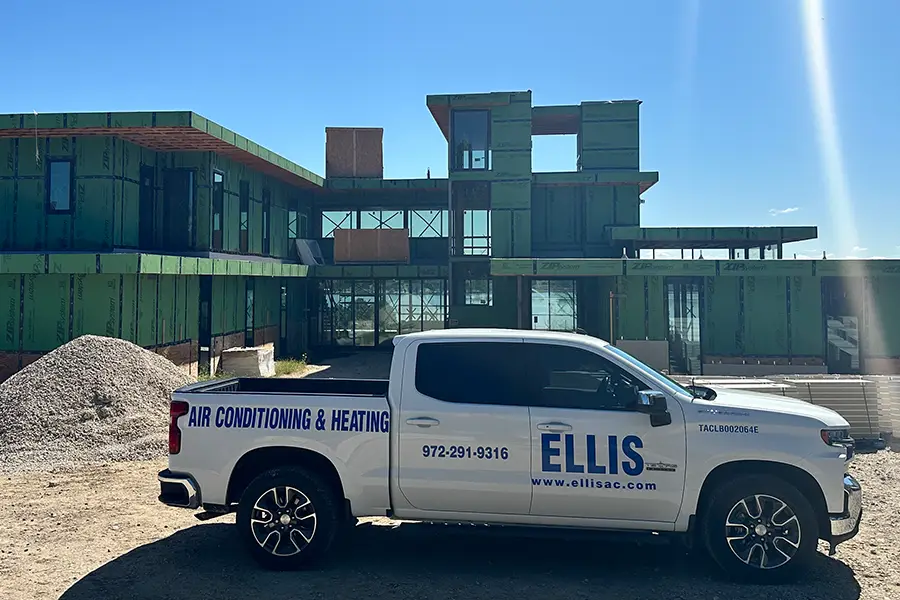
Kingswood Estates is one of Duncanville’s established neighborhoods from the early 1970s, with single-story homes on generous lots that have been well maintained across multiple ownership cycles. The homes there reflect the construction norms of their era: brick exteriors, minimal attic insulation by current standards, duct systems that were sized for the equipment of that decade, and building envelopes with air infiltration levels that would not come close to passing current energy code. The furnaces in many of those homes are on their second replacement cycle, with systems installed in the late 1990s or early 2000s now in their early twenties and beginning to show the wear that accumulates over that kind of tenure in a climate that demands year-round system operation. On a cold Monday morning in late January, a homeowner named Gerald called after his furnace had been running almost continuously for 36 hours without keeping his home above 64 degrees despite a thermostat set to 70.
Our technician arrived and conducted a full system evaluation. He found three contributing conditions operating simultaneously. A section of flexible duct in the attic had collapsed at a transition where the inner liner had separated from the wire coil, reducing airflow through the main supply trunk to roughly half its rated capacity. The blower capacitor had weakened to a point where the motor was running at significantly reduced output, compounding the airflow restriction from the collapsed duct. And the return air grille in the central hallway, the only return air path for the entire system, was positioned directly behind a piece of furniture that had been moved during a recent rearrangement, blocking approximately 60 percent of its effective opening. Each issue alone would have reduced heating performance. Together, they had been forcing the heat exchanger to operate at temperatures well above its designed range for an extended period, and the technician found the exchanger showing early-stage stress at the weld points consistent with sustained high-limit cycling. He replaced the collapsed flex duct section, replaced the capacitor, documented the return air blockage for Gerald to address, and retested the system through multiple heating cycles before leaving. He explained the chain reaction between the three conditions clearly and told Gerald that the exchanger, while currently functional, warranted monitoring at the next annual service given what it had been through. Gerald said the visit was the most thorough service experience he had received on the home in over 15 years of ownership, and that understanding how the three problems had compounded each other gave him a completely different picture of how his heating system actually worked.
Why Duncanville Homeowners Keep Choosing Ellis AC & Furnace Repair
Duncanville is a city where homeowners tend to stay put. Long-term ownership is the norm, and residents who have lived in the same home for 20 or 30 years have a clear and experience-tested sense of which contractors deliver and which ones disappoint. That kind of community institutional memory is not easily fooled, and it is exactly the environment where Ellis AC & Furnace Repair has always been most comfortable operating. We do not rely on marketing to build our reputation in communities like Duncanville. We rely on doing the work thoroughly, explaining it honestly, and being accountable for the result. That standard has kept us in business as a family-owned company for over 50 years, and it is what Duncanville homeowners can count on from every service call we run.
The qualities that Duncanville homeowners consistently identify as most important when selecting a furnace repair company reflect the values we have built this company on across five decades of service in the DFW region.
- Technicians who average more than 10 years with the company and bring genuine familiarity with Duncanville’s construction era, its Blackland Prairie soil conditions, and the specific furnace failure patterns those conditions produce in the city’s established neighborhoods.
- A diagnostic process that evaluates the full system and its surrounding infrastructure rather than stopping at the first component failure, because in a 1970s Duncanville home the context around the equipment is almost always part of the story.
- Fully stocked service trucks that carry parts for the most common repairs across all furnace types and configurations, so the majority of jobs are completed on the first visit without a return trip.
- Written estimates with itemized breakdowns before any work begins, with no additions after the fact and no pressure to approve anything before the homeowner is ready.
- 24/7 emergency furnace repair availability for Duncanville homeowners when a cold front arrives overnight and a heating failure cannot wait until morning.
- A BBB A+ Rating, NATE certification, and TDLR licensing reflecting the professional standards we hold our entire team to on every call in every community we serve across southern Dallas County.
Fifty years of honest service in one region is the kind of record that speaks for itself in communities like Duncanville, where people know their neighbors, talk to each other, and remember which companies showed up and did right by them. We are proud of that record and we protect it on every call.